看了两部意向丰富的电影
昨天去三番看了两部电影。第一部是今年来自巴西的新片《the secret agent》(密探)
看预告片可能会觉得这只是一部政治惊悚片,受雇于资本家的杀手猎捕大学教授。但这跟色彩灰暗的文革十年或者戒严中的台湾不一样,即使是在军政府的高压统治之下,七十年代的巴西也永远是阳光明媚又色彩斑斓的。 狂欢节上大家跳舞,夜晚的公园里大家做爱。
但(又但)与此同时,独裁统治的阴影当然依旧无处不在。电影不仅仅只聚焦在逃亡的男主角一人身上,导演设置了各种各样被时代裹挟受到迫害的人物。 他们来自不同背景、属于不同种族,可能也是在呼应巴西引以为傲的文化多元性。 再加上场景设置、人物的穿着、乃至发型,超现实的道具(两张脸的猫、从死去的鲨鱼腹中露出的人腿飞踢在公园野合的男男女女),狂欢和恐怖交织在一起,无穷多意向的堆叠从不同侧面共同构筑起了这个政治压迫无处不在的世界。
从死去的鲨鱼腹中露出的人腿飞踢在公园野合的男男女女,没看过电影的人可能根本想象不出这是什么场景,超现实出现在故事里反而很现实。总之我非常喜欢这部电影。
去年拿到奥斯卡最佳国际电影的《I’m still here》讲的也是同一时代巴西的军政府统治,但是故事发生在南部发达的圣保罗,视角只局限在精英阶层国会议员一家身上。 而《the secret agent》深入巴西北部欠发达的累西腓,网罗了社会各个阶级,因此这两部里我也是更偏爱这一部。

昨天看的第二部电影是2006年今敏导演的《红辣椒》。跟我几个月之前看的 《未麻的部屋》 一样,今敏笔下的女主角依旧穿梭在现实和梦境之间。 所不同的是,未麻是被动地被拖入虚幻的梦魇,而《红辣椒》里的千叶敦子则是纵身一跃、直接干爆整个男权社会。
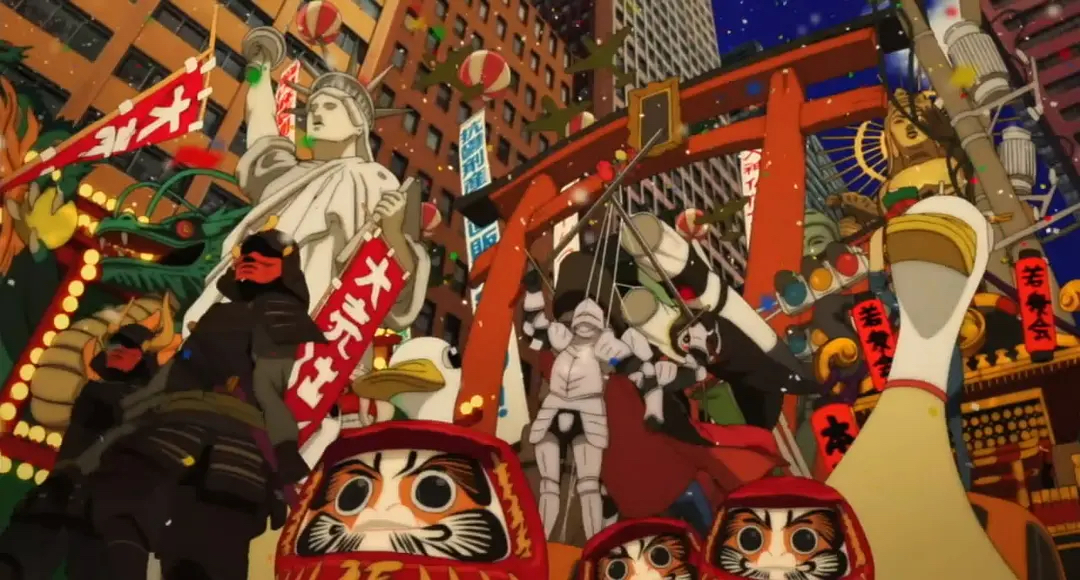
当然这无疑是对于电影主旨最粗暴的总结,事实上,梦境的设定给了今敏无限的自由,纷繁复杂的意向在荧幕上蜂拥而至又一闪而过,给人一种失重或者迷幻的感觉。 红辣椒在可能一分钟都不到的时间里跃入画中化身斯芬克斯、坠入深海变身美人鱼、被鲸鱼一口吞下又变成匹诺曹、乘云驾雾成了孙悟空,画面的快速切换让观众应接不暇。 作为动画电影,画面里的每一处细节都不可能是凭空出现的,游行队伍里的达摩、自由女神、变身成手机偷拍少女裙底的上班族,等等等等意向当然都暗含作者的意图,不是简单一句干爆男权社会可以概括的。
总之看完之后感觉饿两部电影的导演都好厉害,调度无穷多的意向,精心编织出动人的故事,推荐!
Yesterday I went to San Francisco and watched two films. The first was a new Brazilian film released this year, The Secret Agent.
Judging from the trailer alone, you might think this is simply a political thriller: a hitman hired by capitalists hunting down a university professor. But unlike the dark, muted imagery we often associate with China’s Cultural Revolution or Taiwan under martial law, Brazil in the 1970s—despite living under a military dictatorship—is still always bathed in sunlight and bursting with color. People dance during Carnival. People have sex in parks at night.
But (and yet), at the same time, the shadow of authoritarian rule is of course everywhere. The film does not focus solely on the male protagonist; instead, the director introduces a wide range of characters who are swept up by the times and persecuted in different ways. They come from different backgrounds and belong to different races, perhaps echoing Brazil’s much-celebrated cultural diversity.
Combined with the set design, costumes, even hairstyles—and a series of surreal props (a two-faced cat; a human leg protruding from the belly of a dead shark, flying out to kick couples having sex in a park)—carnival and terror intertwine. An endless layering of images constructs, from multiple angles, a world in which political oppression is omnipresent.
A human leg sticking out of a dead shark’s belly and kicking couples in a park is probably impossible to imagine if you haven’t seen the film. Yet within the story, the surreal somehow feels more real than reality itself. In short, I really loved this film.
Last year’s Oscar winner for Best International Feature, I’m Still Here, also deals with Brazil’s military dictatorship of the same era. But its story is set in the more developed southern city of São Paulo and focuses narrowly on an elite family of a congressman. By contrast, The Secret Agent delves into the underdeveloped northern city of Recife and brings together characters from across social classes. Between the two, this is the one I prefer.
The second film I watched yesterday was Paprika, directed by Satoshi Kon in 2006. Like Perfect Blue, which I watched a few months ago, Kon’s female protagonist once again moves fluidly between reality and dreams. The difference is that Mima is passively dragged into a nightmarish illusion, whereas in Paprika, Atsuko Chiba dives headfirst in— essentially blowing up the entire patriarchal order.
Of course, that’s a deliberately crude summary of the film’s core idea. In reality, the dream framework gives Kon almost limitless freedom. Dense, intricate images surge onto the screen and vanish just as quickly, creating a sensation of weightlessness or hallucination. In what feels like less than a minute, Paprika leaps into a painting to become the Sphinx, plunges into the sea as a mermaid, gets swallowed by a whale and turns into Pinocchio, then rides the clouds as Sun Wukong. The rapid-fire transitions leave the viewer barely able to keep up. As an animated film, none of these details can be accidental. The parade of imagery—Daruma dolls, the Statue of Liberty, office workers transformed into cell phones secretly filming up girls’ skirts—clearly carries the director’s intent. It’s far more complex than something that can be summed up with a single line about “smashing patriarchy.”
All in all, after watching these two films, I was struck by how extraordinary both directors are: orchestrating an overwhelming number of images and carefully weaving them into deeply compelling stories. Highly recommended.
👁️ 0 views
 Subscribe via RSS